Godel, Escher, Bach
This one is on the production list — the three-minute video isn't out yet. Want it sooner? Tell us: hello@distilshelf.com with "Godel, Escher, Bach" in the subject.
 3:04
3:04 3:41
3:41 2:52
2:52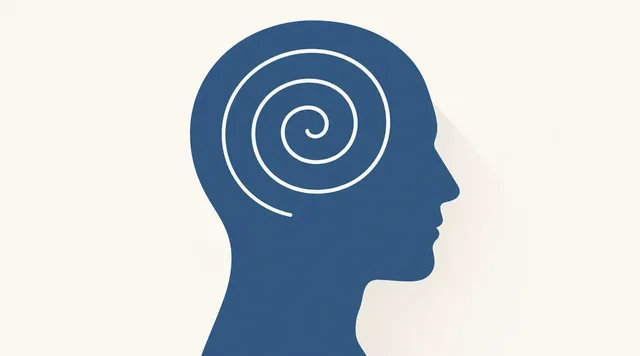 3:16
3:16What is Godel, Escher, Bach about?
Douglas Hofstadter weaves Godel's incompleteness theorem, Escher's impossible drawings, and Bach's fugues into one question: how does consciousness arise from lifeless matter? His answer centers on strange loops, self-referential structures where a system's symbols come to represent the system itself, which he argues is the root of meaning and selfhood.
Key ideas from Godel, Escher, Bach
Strange Loops
When a system moves through levels of a hierarchy and unexpectedly arrives back where it began, like Escher's hands drawing each other, Hofstadter calls it a strange loop. He argues the self is exactly such a loop in the brain.
Godel's Incompleteness
Godel proved any consistent formal system rich enough for arithmetic contains true statements it cannot prove, by making mathematics talk about itself. Hofstadter treats this self-reference as the deepest clue to how minds emerge from rules.
Levels of Meaning
Meaning emerges when meaningless symbols, neurons, notes, or logical tokens, are arranged so patterns at a higher level carry information the lower level knows nothing about. Ant colonies, brains, and fugues all illustrate the same trick.
Lines worth keeping
- A self is what happens when a pile of symbols becomes complicated enough to point at itself.
- The gap between neurons and consciousness may be the same gap between notes and a fugue, real but not magical.
Is Godel, Escher, Bach worth reading?
Only commit if you will actually do the work, because GEB is famously demanding: 700 plus pages of formal logic, puzzles, and playful dialogues that some readers find brilliant and others find exhausting. Programmers, mathematicians, and puzzle lovers often call it life-changing. Everyone else should read Hofstadter's shorter I Am a Strange Loop for the core thesis.
Douglas Hofstadter · 1979 · Science & Big Ideas · Distilshelf editorial · Updated August 2026